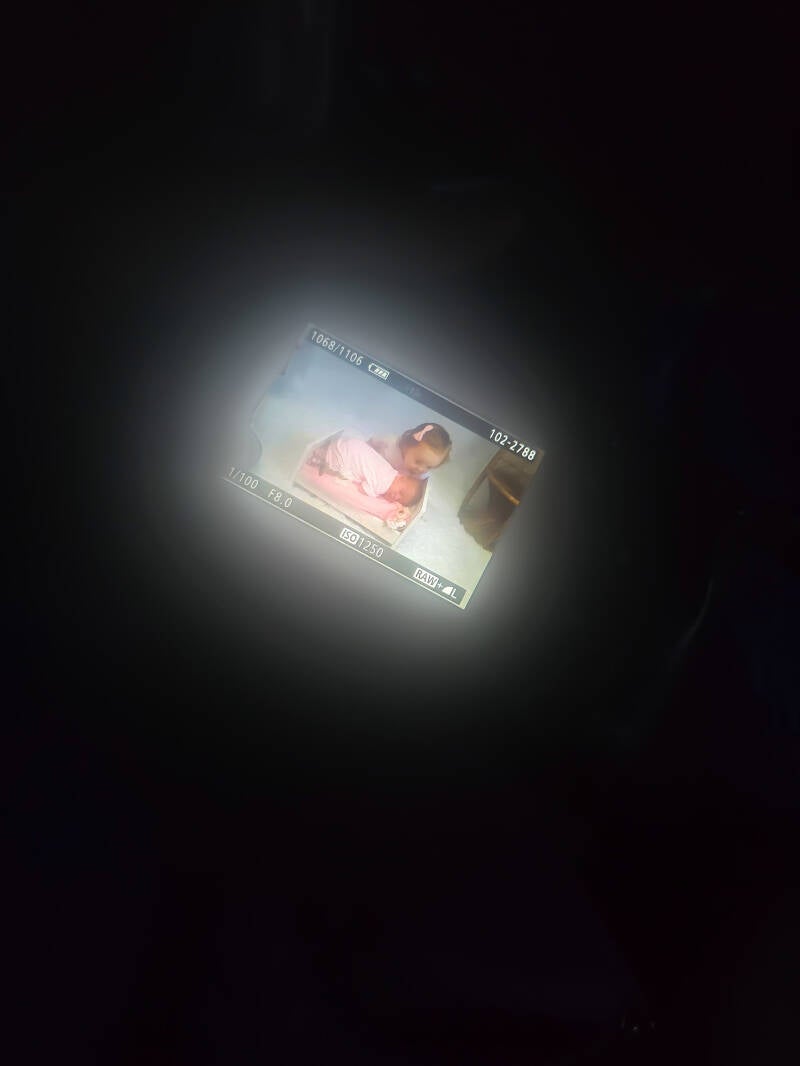
Photography doesn't end when I press the shutter. There is a whole process between taking a photograph and delivering the finished image to a client — involving time, professional software, equipment, storage, training and creative decision-making.
THE RAW FILE
I photograph in RAW. A RAW file is essentially the digital negative. It contains a large amount of information captured by the camera and is intended to be processed before becoming the finished photograph. RAW files can actually look flatter before processing because they are designed to retain information rather than look immediately finished. A RAW file isn't normally the finished product.
CULLING
Before editing even begins, photographs have to be reviewed. Focus, expression, composition, movement, duplicates and technical quality are checked before deciding which images progress to the final collection. That takes time too.
PROFESSIONAL EDITING
Photographers may work across software including Adobe Lightroom, Adobe Photoshop, Capture One, Affinity Photo, DxO PhotoLab, ON1 Photo RAW, Luminar and Canon Digital Photo Professional.
These programs aren't simply filters. They allow us to work with exposure, white balance, colour, highlights, shadows, contrast, cropping, lens correction, sharpening, noise and many other elements involved in developing a digital photograph.
Professional photography also has ongoing costs. Many of these tools involve monthly subscriptions, licences, upgrades and cloud storage, whether I'm photographing one client that week or twenty. Then there are cameras, lenses, computers capable of processing large RAW files, memory cards, hard drives, backup storage, online galleries and the continual maintenance and replacement of equipment.
TIME
A one-hour photoshoot isn't one hour of work. There is preparation before the session, the photography itself, transferring and backing up files, culling, editing, checking, exporting, uploading and finally delivering the photographs.
Some individual photographs need very little work. Others need considerably more. The editing time is part of what you're paying a professional photographer for.
TRAINING & EXPERIENCE
Software is only a tool. Knowing what to change — and equally importantly, what not to change — comes through education, practice, experimentation and experience. Photography involves technical knowledge alongside artistic judgement.
AND WHAT ABOUT AI?
Yes, I have experimented with AI — openly and deliberately. For some creative experiments I've used ChatGPT alongside my photography to explore ideas, compare colour treatments, look at different creative possibilities and see how technology might interpret or transform an image.
Sometimes the value of an experiment is simply being able to look at two possibilities side by side and say, “That works,” “that doesn't,” or “I prefer the original.” That's very different from my normal photographic editing workflow.
There are important differences between RAW development, traditional photographic editing and retouching, AI-assisted tools within editing software, using AI to compare or explore creative possibilities, and generative AI that creates, replaces or reconstructs parts of an image. They shouldn't all be described as the same thing.
AI can be useful as an experimental and comparison tool without the AI version becoming the final photograph. For me, that's part of understanding the technology: experimenting with it, seeing what it can and can't do, comparing the results and then making my own creative decision. The final decision still belongs to the photographer.
THE FINISHED FILE
After editing, the photograph is exported into a format suitable for its intended use — usually a high-quality JPEG for client delivery. Resolution, dimensions, colour space, compression and export quality can all affect that finished file.
Different uses can also require different exports. A photograph prepared for professional printing may not be exported in exactly the same way as one prepared for a website or social media. A smaller web version doesn't mean the original high-resolution photograph is poor quality.
AND THEN THERE'S SOCIAL MEDIA 😅
Facebook and other social platforms may resize and compress photographs after they're uploaded. Messenger, screenshots, downloads and repeated re-uploading can reduce quality further.
The photograph displayed on social media therefore isn't necessarily equivalent to the high-resolution photograph delivered by the photographer, and a Facebook copy shouldn't be used to judge the resolution or quality of the original delivered file.
For printing and archiving, always keep and use your properly delivered high-resolution files.
When you pay for professional photography, you're not simply paying for somebody to press a button. You're paying for the equipment, software, storage, education, experience, preparation, photography, selection, editing, finishing and delivery that happen around that button press.
And ultimately, you're paying for something even less tangible:
The photographer knowing when the photograph is finished.
📸 Evolve Studios
Photography • Art • Authenticity
Add comment
Comments